Leathers
&
Other Soft Corals
© www.livestockusa.org, 2003-2011
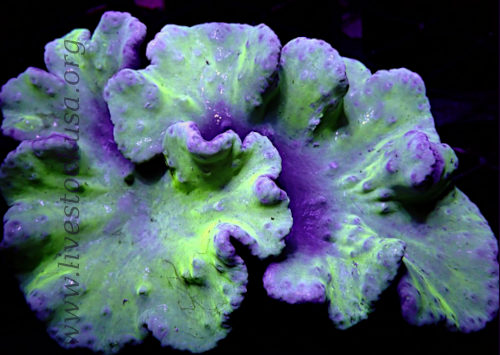
Sarcophyton Leather
Leathers and other "not necessarily related,
but similar-appearing soft corals"
are corals without an exoskeleton.
They are extremely varied in shape and form,
as well as color. Most commonly, they are shades
of browns and grays, but there are also many brightly
colored types of greens and yellows.
The colors are sometimes a result
of the symbiotic zooanthellae (algae) that live
within the animal, just like hard corals.
Some, like the "carnations,"
are brightly colored, but not from zooanthellae.
As with hard corals, the sugary byproducts
of the algae's photosynthesis is a valuable food
source for the animal.
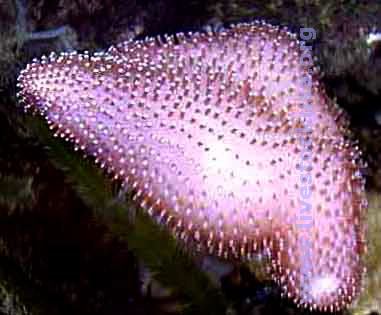
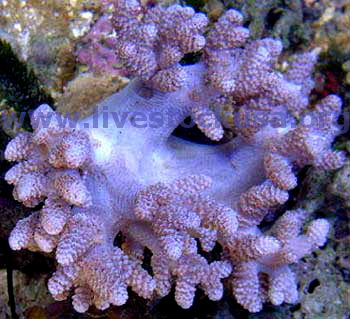
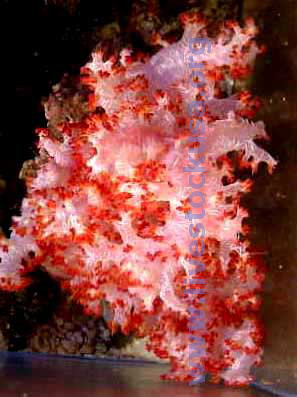
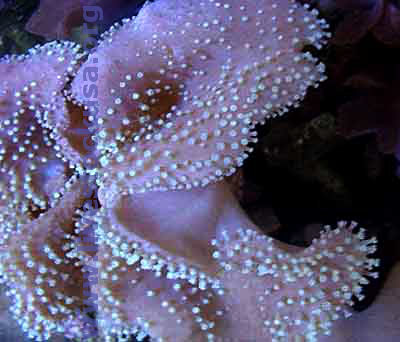
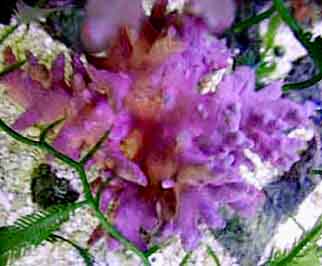
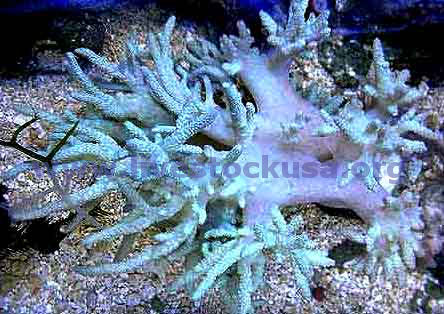
Above: Carnation (Dendronephthea)
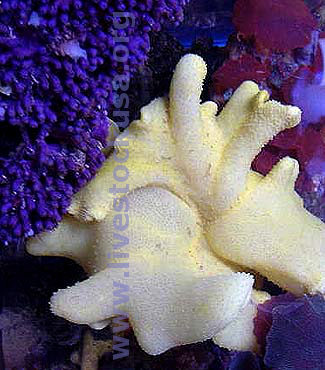
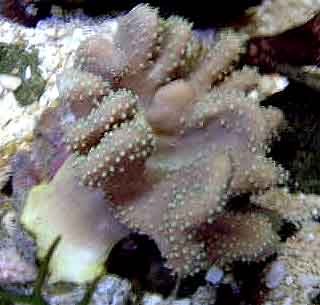
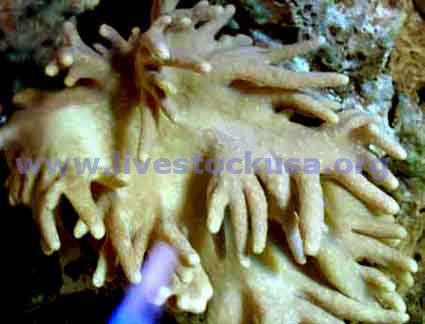
Below: (Dull) Yellow Sarcophyton Leather, with Polyps Extended
In general, leathers are another of the easy "starter"
corals for folks who are not expert, long-time
reefkeepers. Most of the hardcore reefkeepers,
however, have some prized leather corals in their
tanks and collections.
They are the perfect
visual contrast to the hard corals.
Their names tell much about them: Finger Leather,
Yellow or Green Leather, Toadstool, Mushroom
or Umbrella Leather, Stubby Finger Leather,
Hairy Leather, Rose Leather, Cabbage or Flower
Leather, Devil's Hand or Finger, and so on.
Get the idea?
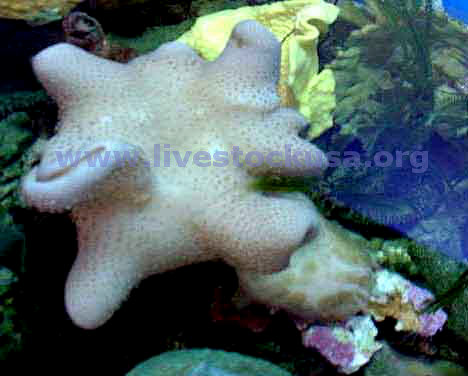
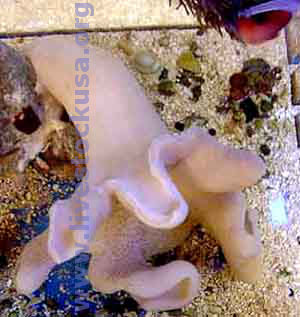
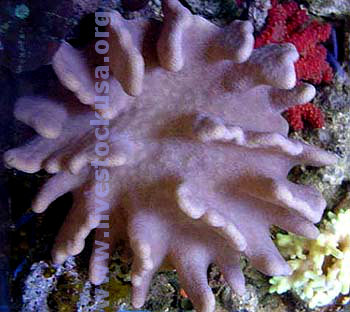
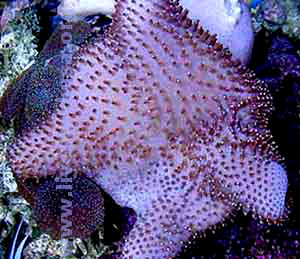
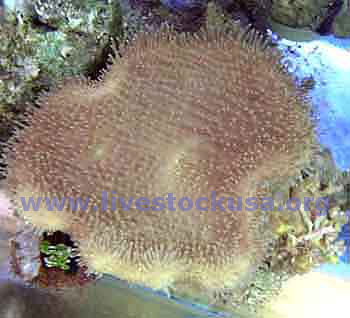
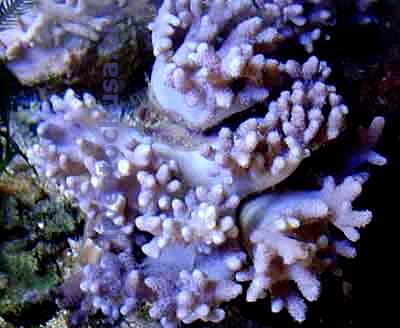
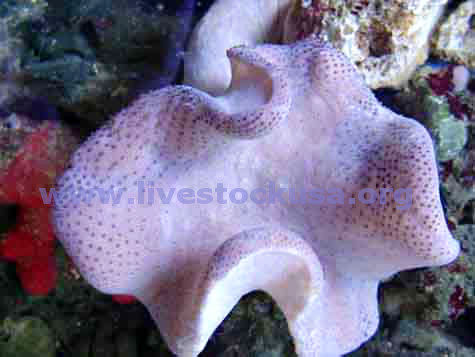
"Toadstool" or "Umbrella" Sarcophyton
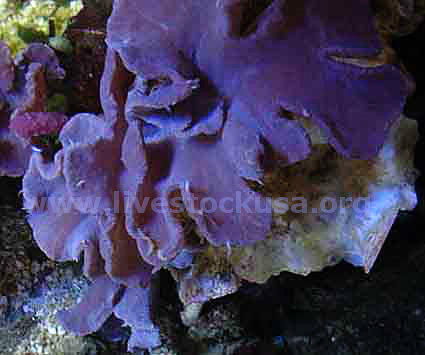
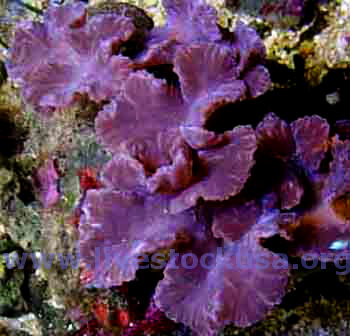
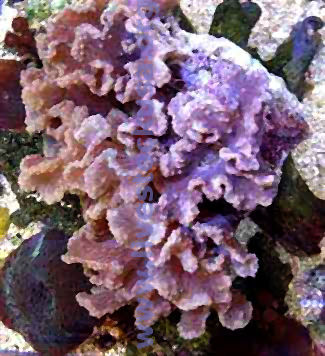
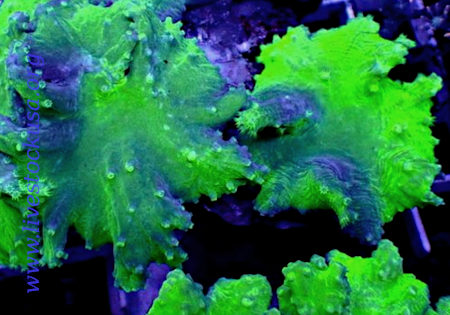
Flower or Cabbage Leather
There are ones with short stalks and long polyps,
short polyps with long stalks, and others without stalks.
Some have polyps that are colored in
contrast with the main body of the animal.
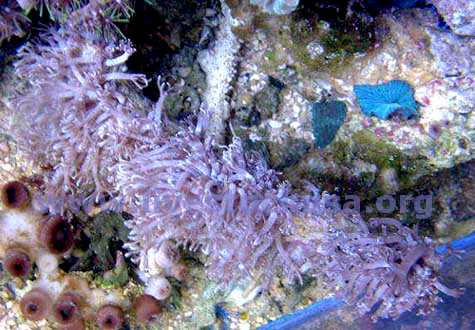
Above Right: Xenia
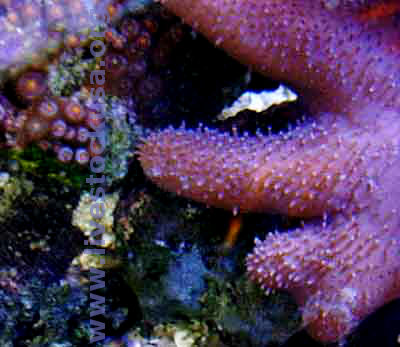
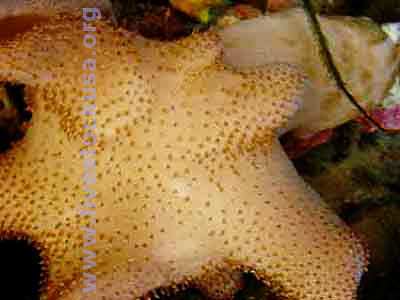
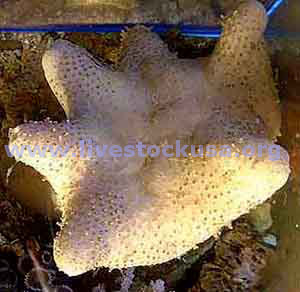
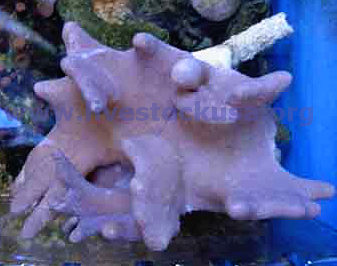
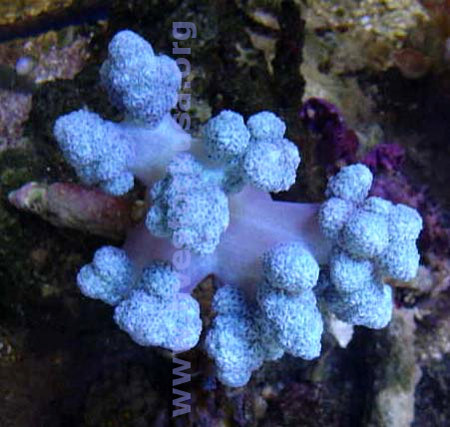
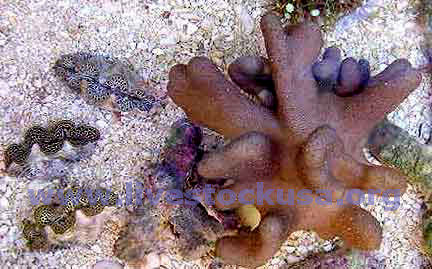
"Stubby" Finger Leather
While their polyps are retracted they appear
smooth, but when they are distended, they
often appear nearly fuzzy.
It really is neat to see them all
smooth when the lights come on in the morning,
and watch as they extend their polyps
for a day of feeding. They often react quite
quickly and extend polyps and maximize size
when I feed them my "free invert food."
(See our articles.)
"Stubby" Finger Leather
Like mushrooms and polyp rocks, most types do
very well under less than halide lighting ...
a big "plus" in my view.
Any of the various reef-type fluorescent
lighting will usually be sufficient for
keeping and growing them. They often are
abundant in lagoons, which are areas of
higher turbidity and poorer water
quality than the outer reef.
Leather with Polyps
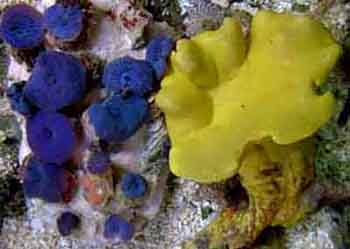
Yellow Leather with Blue Mushrooms
Another neat thing about leathers is that
some will be accepted as a host for Clown
(anemone) fish (genus Amphiprion) when a
suitable anemone is not present. This has been
recorded in the wild, not just in captivity
in aquaria. Clownfish have spawned in captivity
with a leather coral for a host as well!
Sarcophyton
Sarcophyton
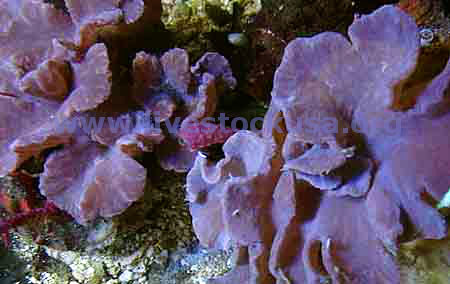
Above: Lobophyton
Below: Lobophyton "Special Finger Leather"
The most common leathers we see are in the
genera Sarcophyton (Toadstool, Mushroom or Umbrella
Leathers), and Lobophyton (Ridge, Rose, and other
wrinkled types).
Not too long ago I had a conversation
with a leather researcher who said
that Sarcophyton should actually be split
into three genera, so the ones that we all
know as "Sarcos" would no longer
be classified as such due to the rules of taxonomic nomenclature.
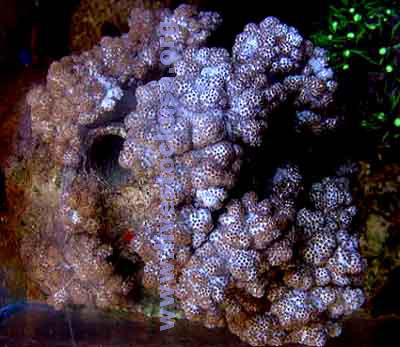
Ridge Leather
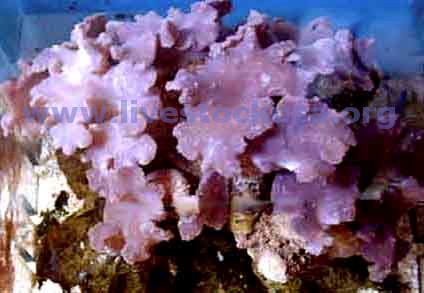
Flower or Cabbage Leather
(Capnella shown below)
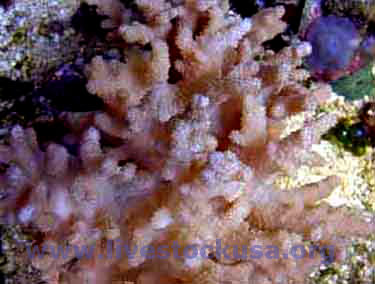
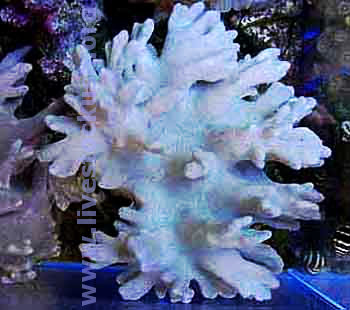
Some very similar looking corals
are often sold as leathers, particularly fingery
things, such as, Xenia, Lithophyton, Capnella,
Dendronepthea, Nepthea, Lemnalia, and others which
are "soft corals," but not actually leathers.
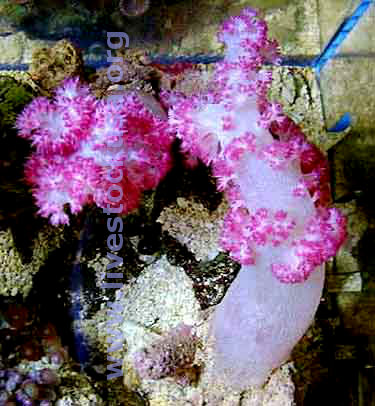
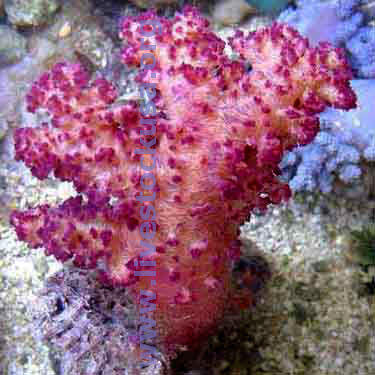
Lemnalia (Neospongoides)
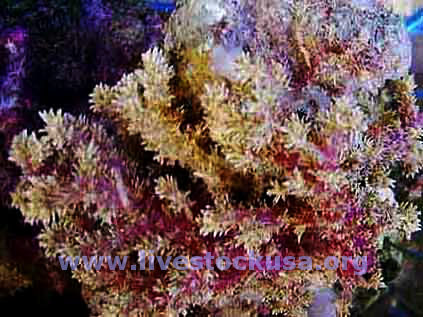
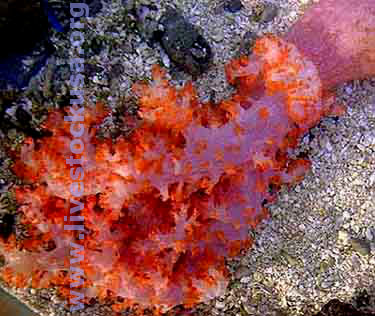
Maroon Carnation
Red Carnation

Another amazing aspect of leathers is that
they can be cultivated by cutting them! Many
people do this by slicing them with a single-edged
razor blade, in half, or quarters right down the
middle, and each piece will often grow into a
new leather, when done properly. WOW!, eh?
Leathers practice chemical warfare, since stinging
polyps (aggressive defense) or a hard skeleton
(passive defense) are not available options.
They emit chemicals toxic to potential threats,
such as other corals trying to horn in on their
turf, so it is important to not let them touch,
or even be too near other corals. Usually this
is a few inches on either side of the fully
extended, opened up animal.
Don't be fooled if they appear to shrink in
size, which they sometimes do ... appearing
to be dying off.
They then often shed an
outer layer of "skin," followed
by a growth period after which they are larger
than before, when you thought it was dying.
Some of these chemicals are believed to have
or hold potential for being anti-carcinogens -
that is they might be cures for cancer.
Research is currently underway into
this possibility.
Green Finger Leather
Besides size, costs are generally based on color.
Bright yellow is more expensive than dull yellow.
The Tonga Yellow Leathers which everyone wants
when they see them, ship incredibly poorly.
Those that do well with them, keep them
in bright light, often near the surface, with
super high water quality and flow. We do not
sell them because we don't believe bringing in
20 of something to get two good ones is something
we should be doing. It is one of those items
on my "don't wanna sell" list.
Devil's Finger Leather
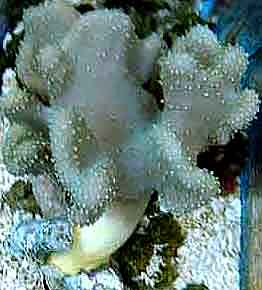
"Stubby" Finger Leather
In stores, most leathers run from $30 (small
brown or gray ones), to $60 (large brown or
gray or small-med. colored types). More costly
are the fancy, large, or rare types and
colors, which may be $100 or more. You must
keep in mind the large and colorful types
require lots of water for shipping, and at
8.6 lbs. per U.S. gallon and that gets expensive!
Hopefully the photos on this page will
help you sort out the types of leathers and
maybe help you decide which types you
would like to have in your tanks.
Lemnalia - Neospongoides
Love Your Leathers!
To view other pages,
you may select from topics
in the following dropdown menu ...
A couple of related articles ...
Polyps
Mushrooms
HOME